

In the current authoring flow, New guide opens Guidance Analytics because every new guide
starts from a saved realtime run. There is no blank guide composer. Keep a run that fails before
its first useful step as troubleshooting evidence rather than saving it as a guide.
Before you start
- Enable Guidance and exercise the journey in Test.
- Use a safe example account and stop before any action that should remain customer-owned.
- Install the Dubot browser extension if you need to change the guide’s steps on the live page.
Review the run
1
Open Guidance Analytics
Open Guidance, then Analytics. Start with the workspace totals, then choose the theme
that contains the journey. A run can have several themes, so theme counts can overlap.
2
Choose a representative session
Filter the theme’s sessions by outcome. Prefer a clean completed run with the intended start,
path, and stopping point. A completed outcome alone does not prove that every step was correct.
3
Inspect the timeline
Open the run and review its pages, steps, targets, customer-owned interactions, tool activity,
errors, and final outcome. Add or correct themes when they will make later analysis clearer.
4
Save it as a guide
Select Save as guide. Dubot creates a draft guide from the reviewed run and opens its guide
detail page. The source run remains linked as evidence.
Review and publish the guide
1
Edit the guide details
Rewrite the title, goal and start condition in general terms, then add one trigger phrase per
line. The generated draft reflects the run, so its title can name a recovery step and its start
condition can contain page IDs. Trigger phrases stay off until the guide is published. See
Write guides that work for what to check in each field.
2
Review the composition
Check the generated sequence and remove accidental or redundant interactions. A guide must
contain at least one step before it can be published. If the sequence contains an Indicate
step, keep the guide in Test: the current product blocks that step type from Production.
3
Edit steps in the extension
Select Edit in the extension when the targets or instructions need work on the live product
page. Choose a safe starting URL and save the edited composition back to the guide draft.
4
Publish the guide
For a Production-compatible composition, save the draft, then select Publish guide. The
published version enters the workspace guide catalog. A newer draft does not replace the live
version until you publish the changes.
5
Add it to the Resource Center
In Resource Center, add the published guide to All pages or a page override, then publish
the Resource Center. Guidance must also remain enabled in the target environment.
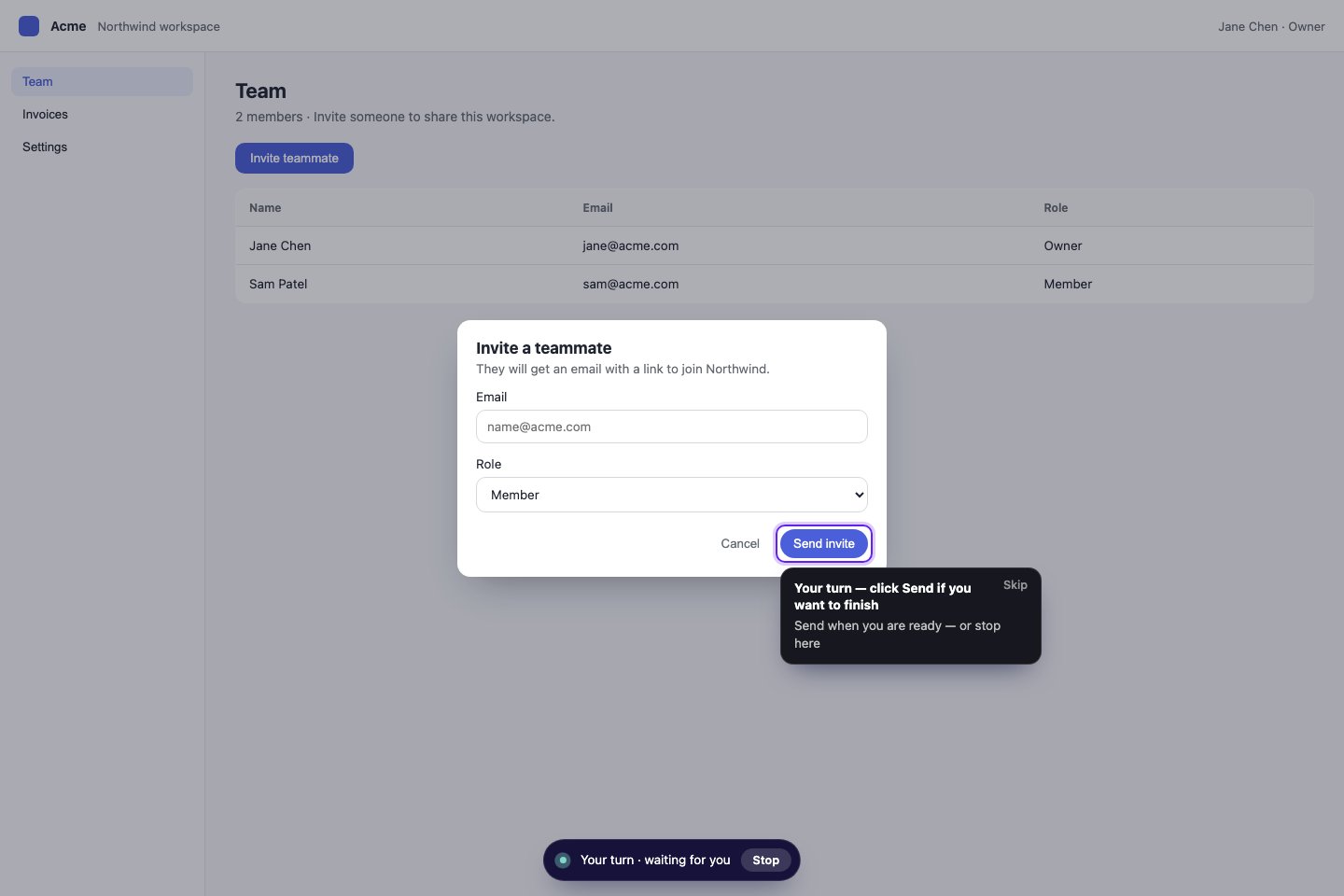
A reviewed guide in Test waits on the highlighted customer-owned step.